
Utah DLD Motorcycle Practice Test 51
- Questions25
- Correct to pass20
- Passing score80%
- Minimum age16 years
-
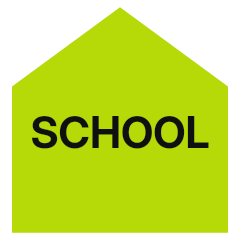
1. What must a driver be ready to do along the stretch of road where this sign is posted?
Show answer
Answer D: Slow down and stop for a child who steps into the roadway
Children misjudge speed and distance and act without warning, so the driver reduces speed, covers the brake and scans the sidewalks and parked vehicles.
-
2. A large truck is passing you on a two-lane road. What is the safest thing to do?
Show answer
Answer C: Keep right in your lane and ease off the gas a little
Staying in your own lane and easing off shortens the pass without forcing you onto a soft shoulder or into the truck's path.
-
3. A parking space is marked with the international symbol of access. Who may use it?
Show answer
Answer A: Only a vehicle displaying the required placard or plate
Accessible spaces may be used only by a vehicle that displays a valid disability placard or plate, no matter how short the stop would be.
-
4. A highway lane is marked with a large white diamond and signed as a high-occupancy vehicle lane. Who may use it?
Show answer
Answer B: Only vehicles carrying at least the number of occupants shown on the sign, during the posted hours
The diamond marking identifies a preferential lane whose occupancy requirement and hours of operation are stated on the accompanying signs.
-
5. A single solid white line separates two lanes running in the same direction. What is it telling drivers?
Show answer
Answer A: Changing lanes there is discouraged
A solid white lane line discourages lane changing, typically where merging or weaving would create a hazard.
-
6. When downshifting as the motorcycle slows, what keeps the rear tire from skidding?
Show answer
Answer A: Easing the clutch lever out smoothly instead of releasing it abruptly
Letting the clutch out gradually lets engine speed and road speed match, so the rear wheel is not forced to slow suddenly.
-
7. When may a driver of a motor vehicle use a marked bicycle lane?
Show answer
Answer C: Only to cross it when turning or entering the road where the markings allow
A bike lane is a lane for cyclists. Motor vehicles may only cross it to enter or leave the road or to make a turn where the markings permit.
-
8. When should a passenger get on the motorcycle?
Show answer
Answer D: After the engine has been started and the operator is ready
Mounting after the engine is running and the operator is settled keeps the motorcycle stable and spares the operator a long balancing act with the extra weight aboard.
-
9. A bag strapped to the back of your motorcycle works loose and starts to shift as you ride. What should you do?
Show answer
Answer C: Slow smoothly, pull off the road, and secure the load before riding on
A load that moves changes the balance of the motorcycle and can foul a wheel or the chain, so stop as soon as you safely can and fasten it properly.
-
10. The circular sign shape is reserved for which warning?
Show answer
Answer C: Advance warning of a highway-rail grade crossing
A round yellow sign with a black X and the letters RR is the grade crossing advance warning sign, and the circular outline is used for no other message.
-
11. What is the correct position for the feet while riding?
Show answer
Answer C: Firmly on the footrests with the toes level
Toes kept level stay clear of the pavement when the motorcycle leans and leave the foot ready to reach the brake pedal or shift lever.
-
12. You are waiting to turn and the traffic ahead has stopped. Where must you not come to rest?
Show answer
Answer D: On the crosswalk, which people need in order to cross the street
Stopping on a crosswalk forces pedestrians out into the traffic lanes to get around you, so you hold back before it instead.
-
13. Who is best suited to ride as the sweep at the back of a group?
Show answer
Answer B: An experienced rider who can handle a problem at the back
The sweep has to notice a rider dropping back or stopping and deal with it away from the rest of the group, which takes judgment and experience.
-
14. A driver who has been drinking has two cups of strong coffee. What has changed?
Show answer
Answer D: The driver is more awake but just as impaired
Coffee can make a drinker feel alert, but nothing except time removes alcohol from the blood, so a wide awake drinker is still an impaired driver.
-
15. What do white lane lines painted between travel lanes indicate?
Show answer
Answer A: Traffic in the adjacent lane moves in the same direction as you
White markings separate lanes carrying traffic in the same direction and mark the right edge of the roadway.
-
16. The lane you are in has a right-turn-only arrow painted on the pavement. What must you do?
Show answer
Answer C: Turn right, because a lane-use arrow is a legal requirement
Lane-use arrows painted on the pavement are regulatory markings, so a driver in that lane must travel in the direction shown.
-
17. A turn restriction sign at the corner shows a range of times below the symbol. What does that mean?
Show answer
Answer A: The turn is banned only during the hours shown on the sign
Times posted under a regulatory symbol set the period during which the restriction applies; outside those hours the movement is permitted.
-
18. You have had to leave the pavement onto a loose gravel shoulder and now need to stop. How should you brake?
Show answer
Answer D: Use both brakes gently and evenly, expecting a much longer stopping distance
Loose gravel cuts available traction sharply, so apply both brakes lightly and smoothly and allow far more room than you would need on pavement.
-
19. A sign on a divided highway reads Keep Right Except to Pass. What does it require of you?
Show answer
Answer A: Use the left lane only to overtake, then return to a lane on the right
The left lane on such a highway is reserved for overtaking, so a driver who has finished a pass must move back to the right.
-
20. You are driving on an open highway in a strong crosswind. What is the safest adjustment?
Show answer
Answer A: Reduce speed and keep a firm grip, expecting gusts on bridges and beside large vehicles
Gusts hit hardest in open gaps, on bridges and when passing high-sided vehicles, so a lower speed and a firm grip let you correct before you are pushed out of your lane.
-
21. What does Utah require before issuing a motorcycle learner permit?
Show answer
Answer D: The applicant must be at least 16, already hold a valid Class D or commercial license and pass the vision test and motorcycle written test
A Utah motorcycle learner permit is issued to an applicant at least 16 years old who already holds a valid Class D or commercial license and has passed the vision screening and the motorcycle written test; the permit lasts six months.
-
22. Why do experienced riders squeeze the clutch lever while starting the engine, even with the neutral light showing?
Show answer
Answer A: In case a gear is engaged, so the motorcycle cannot lurch forward
A neutral light can be wrong, and a disengaged clutch means the machine stays still even if the transmission is actually in gear.
-
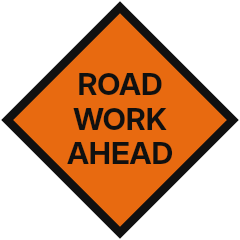
23. Beyond this sign, cones and temporary signs lead traffic along a path that does not agree with the lines painted on the pavement. Which one must the driver follow?
Show answer
Answer C: The temporary arrangement, because it replaces the permanent layout while the work lasts
Temporary traffic control set up for the work takes precedence over the permanent signs and markings, which no longer describe how the road is being used.
-
24. On a long, straight highway you feel your attention fading. What helps you stay alert?
Show answer
Answer A: Keep your eyes moving, scan mirrors and signs, and take regular breaks
Staring at one point brings on highway hypnosis. Active scanning keeps the mind engaged, and a break every couple of hours restores alertness.
-
25. What does research say about the effect of a full coverage helmet on a rider's ability to see and hear traffic?
Show answer
Answer B: It leaves the view and the useful hearing a rider needs largely intact
Certified helmets leave far more peripheral vision than a rider needs to check traffic, and riders wearing them still hear the sounds that matter.